
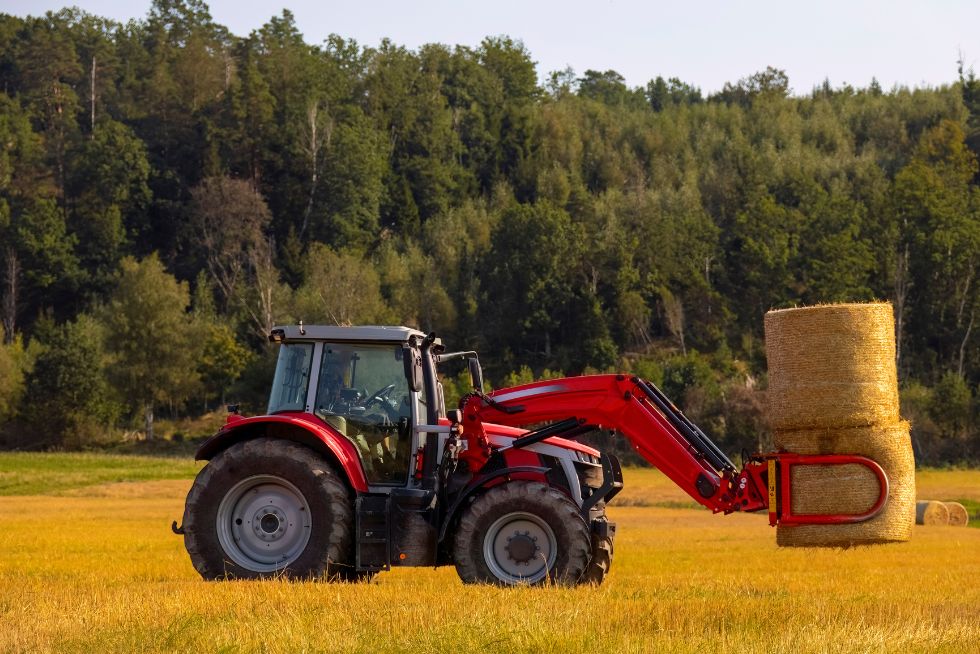
Imagine you’re driving on a two-lane highway outside Lincoln. As you crest a hill, a tractor partially in your lane and traveling at just 20 mph suddenly comes into view. There’s no time to react. In seconds, a routine drive turns into a serious crash.
Situations like this are not uncommon in Nebraska. Agriculture is the backbone of our state’s economy, and during planting and harvest seasons, farm equipment regularly shares the road with everyday drivers. When collisions happen, they are often severe.
If you’ve been involved in a collision with farm equipment, what you do next can impact your ability to recover compensation. Here’s what to know after a crash, and how our Nebraska auto accident lawyers can help identify who may be responsible. If you’ve been injured, contact us today to schedule a free consultation.
Why Farm Equipment Is So Dangerous on Nebraska Roads
Farm equipment on the road poses risks beyond those encountered in typical driving conditions. These hazards can limit visibility, reduce your reaction time, and increase the likelihood of serious collisions. Across the state, crashes involving farm equipment have led to serious injuries and fatalities, including a combine operator killed in Firth after being struck at a crossing and a driver injured in Beatrice after rear-ending a tractor on a rural roadway.
Several aspects unique to these vehicles can increase the risk of a collision when sharing the road with passenger cars:
- Extreme Speed Differences: Tractors and similar equipment often have top speeds far below posted speed limits, typically 25 mph or less. On a 55-mph road, that difference can leave drivers with only seconds to react.
- Oversized Width: Farm machinery can extend over a single lane or take up more space than expected, especially when attachments are involved. This can force other vehicles into tight or unsafe positions.
- Limited Visibility: Large farm equipment can block sightlines on hills, curves, and narrow rural roads, making it harder to see what lies ahead until it’s too late.
- Unpredictable Movements: Wide turns, sudden stops, or shifts in position can happen quickly, particularly when farm equipment is entering or leaving a field.
- Inconsistent Road Experience: Some tractor operators spend more time working in fields than on public roads, which can affect how they navigate traffic conditions.
These risks are even more pronounced on certain types of roads. According to the Great Plains Center for Agricultural Health, about 70% of farm equipment crashes occur in rural areas. They are more likely on higher-speed routes (over 50 mph), in high-traffic corridors, and on stretches with narrower lanes.
Nebraska Laws on Farm Equipment
Nebraska law allows farm equipment on public roads, but that permission comes with responsibilities. These rules are designed to reduce risk and protect everyone sharing the roadway.
Legal requirements include:
- Permitted Roadway Use: Farm equipment may use public roads when necessary for agricultural operations, although certain highways may have restrictions.
- Required Lighting and Signals: Operators must use proper lighting and signals, especially during low-visibility conditions or nighttime travel, so that other drivers can see the equipment in time.
- Reflectors and SMV Markings: Slow-moving vehicle emblems and reflective materials are required to alert approaching drivers to reduced speeds.
- Ongoing Duty of Care: Even when farm equipment is legally on the road, operators must act reasonably and avoid creating unnecessary hazards.
In practice, however, compliance is not always consistent. One study found that Nebraska scored 18 on compliance with national lighting and marking standards, ranking below nearby states such as Kansas and South Dakota.
When visibility is reduced or safety measures are missing, the risk of serious crashes increases.
Who May Be Liable After a Crash
Determining fault in a farm equipment accident can be complex. These cases typically involve multiple contributing factors rather than a single clear cause.
Liability may fall on one or more parties, including:
- The Equipment Operator: For unsafe operation or poor visibility
- The Other Driver: For speeding, distraction, or passing errors
- The Equipment Owner: For missing or poorly maintained safety features
- A City or State Agency: Where road design, signage, or poor maintenance contributed to the crash
- Multiple Parties: In many cases, fault is shared based on each party’s role.
Identifying all responsible parties is critical to building a strong claim. A skilled Nebraska auto accident lawyer can investigate the details, determine how liability is distributed, and pursue compensation from all available sources.
Challenges in Farm Equipment Accident Cases
Farm equipment accidents can be more complicated than typical car crashes. To build a strong claim, you need to examine how the equipment was used and whether it complied with basic safety rules.
Common complications include:
- Unclear Visibility Factors: It may be difficult to determine whether lights, reflectors, or slow-moving vehicle markings were present or visible at the time of the crash.
- Conflicting Accounts: Drivers may provide different versions of events, particularly regarding speed, positioning, or right-of-way.
- Changed or Altered Evidence: Equipment may be moved, repaired, or modified before it can be properly inspected for evidence of negligence.
- Limited Evidence: Rural crashes often have few witnesses and little to no video footage.
- Multiple Contributing Factors: Speed differences, road conditions, and visibility issues may all play a role, making fault harder to pinpoint.
These challenges can make it difficult to determine exactly what happened and who is responsible without a thorough investigation of the evidence.
What to Do After an Accident With Farm Equipment
What you do immediately after a crash can affect your safety, your recovery, and your ability to pursue a claim.
After an accident, take the following steps:
- Get to Safety and Call for Help: Move out of traffic if you can and contact emergency services right away.
- Document Visibility Conditions: Note the time of day, lighting, and weather, and take photos of hills, curves, lane width, and anything that may have limited the visibility of the equipment.
- Photograph Safety Markings: Capture whether lights, reflectors, and slow-moving vehicle emblems were present and visible, along with any attachments extending into the roadway.
- Gather All Relevant Information: Collect names, contact details, and any employer or companies associated with the equipment, along with witness information.
- Seek Medical Evaluation Promptly: Even if injuries seem minor, getting checked creates a record and helps identify issues early.
Taking these steps helps create a clear record of what happened and makes it easier to show how the crash occurred and who may be responsible.
Protect Your Rights After a Farm Equipment Crash
A crash involving farm equipment can leave you facing serious injuries, lost income, and mounting medical bills, all while critical evidence begins to disappear.
These cases move fast behind the scenes. Equipment can be repaired, conditions can change, and key details about visibility and safety can be lost if they are not documented early.
At Friedman Law Offices, our Nebraska car accident lawyers act quickly to preserve evidence, examine the equipment involved, and identify every party who may be responsible. We build claims that reflect not just what happened, but the full impact it has had on your life.
If you were injured in a collision with farm equipment, don’t wait until the details are harder to prove. Contact Friedman Law Offices today for a free consultation and take control of your case before critical evidence is gone.