
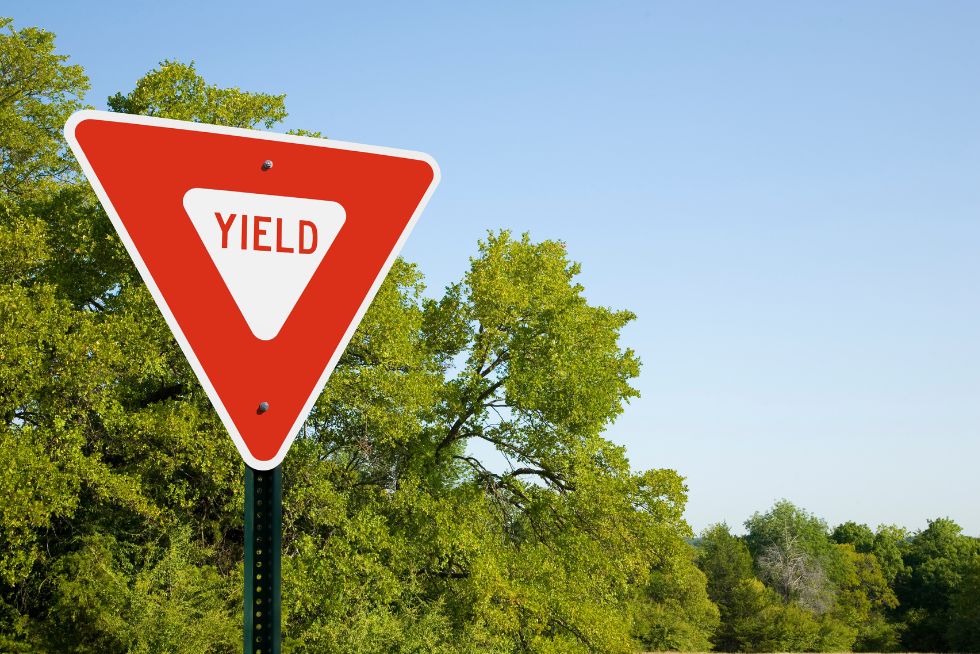
Intersection crashes are among the most dangerous accidents on Nebraska roads, and failure to yield is a leading cause. These collisions often happen because drivers misjudge another vehicle’s speed, make unsafe assumptions about who has the right of way, or simply fail to follow Nebraska traffic laws.
A single mistake at an intersection can lead to devastating T-bone accidents, rollover accident, pedestrian injuries, and other crashes that leave victims with life-changing injuries.
The experienced Nebraska auto accident lawyers at Friedman Law Offices help injured victims hold negligent drivers accountable. Understanding Nebraska’s failure-to-yield laws is an important first step in protecting your rights after a collision. If you’ve been injured in a car accident, contact us today for a free consultation.
Nebraska’s Yield Laws: Where Drivers Make Mistakes
Nebraska law requires drivers to yield in several specific situations. Although many motorists believe they understand right-of-way rules, failure-to-yield crashes remain a major cause of serious intersection accidents throughout Nebraska.
Stop Signs and Controlled Intersections
Drivers approaching a stop sign must come to a complete stop and yield to vehicles or pedestrians who already have the right of way. A driver who rolls through a stop sign without stopping may be considered at fault for the collision.
Many of these accidents occur because a driver assumes another vehicle is farther away than it actually is or believes they have enough time to cross the intersection safely.
Entering a Roadway From a Driveway or Parking Lot
Drivers exiting private driveways, parking lots, or alleys must yield to all traffic already traveling on the roadway. Because the entering driver has the obligation to wait for a safe opening, collisions that occur while pulling into traffic are usually treated as the entering driver’s fault.
This type of crash is common near shopping centers, gas stations, and busy commercial areas.
Left Turns Across Oncoming Traffic
A driver making a left turn must yield to oncoming vehicles and pedestrians crossing the roadway before turning. Left-turn accidents can cause severe injuries because they often involve high-speed side-impact or head-on collisions.
Drivers sometimes misjudge the speed of approaching traffic or attempt to turn during a small gap that is not actually safe.
Pedestrians in Crosswalks
Nebraska drivers must yield to pedestrians who are lawfully within marked or unmarked crosswalks. Many drivers mistakenly believe they only need to stop for pedestrians in painted crosswalks, but Nebraska law also protects pedestrians crossing at intersections without visible markings.
These accidents can cause catastrophic or fatal injuries due to the lack of protection pedestrians have during impact.
Emergency Vehicles
When emergency vehicles approach with their lights and sirens activated, Nebraska drivers must yield the right-of-way, move toward the right side of the roadway, and stop until the emergency vehicle has safely passed.
Failing to yield to police cars, ambulances, or fire trucks can lead to both traffic citations and civil liability if a crash occurs.
Roundabouts
Drivers entering a roundabout must yield to vehicles already circulating inside the circle under Nebraska traffic rules.
Many roundabout crashes occur because drivers either incorrectly assume they can enter without slowing down or fail to properly judge gaps in traffic.
Even though roundabouts are designed to reduce severe crashes overall, drivers who fail to yield can still cause dangerous side-impact and merging collisions.
Failure-to-Yield Violations Often Lead to Serious Crashes
Failure-to-yield accidents typically occur when drivers roll through stop signs, turn left into oncoming traffic, pull out from side streets, merge without yielding, or fail to stop for pedestrians.
These crashes are dangerous because they often occur at intersections where vehicles cross paths at high speeds, leaving drivers little time to react before impact. Many failure-to-yield collisions result in T-bone accidents, rollover crashes, or serious pedestrian accidents where victims have little protection from the force of impact.
How Fault Is Proven in Failure-to-Yield Accidents
Establishing liability in a failure-to-yield crash requires multiple forms of evidence working together to show who had the right of way and how the collision occurred.
Proving that the other driver violated Nebraska traffic laws can make it much easier to show who caused the crash and why they should be held responsible.
| Type of Evidence | How It Helps Prove Fault |
| Police Reports | May document traffic violations or failure-to-yield citations issued at the scene. |
| Traffic Cameras and Dashcams | Can show which driver had the right of way and how the crash occurred. |
| Witness Statements | May confirm which driver failed to yield before the collision. |
| Physical Evidence | Vehicle damage and impact points can help reconstruct the accident. |
Because evidence can disappear quickly after a crash, early investigation is often critical in failure-to-yield accident cases. Insurance companies may dispute who had the right of way, making documentation and preserved evidence important for injured victims pursuing compensation.
Nebraska’s Modified Comparative Negligence Rule
Nebraska follows a modified comparative negligence system with a 50% bar to recovery. Under this rule, injured victims may recover compensation as long as they are found 50% or less responsible for the accident. However, compensation is reduced by the injured person’s percentage of fault.
Because of this rule, establishing that the other driver violated Nebraska’s yield laws can play an important role in protecting an injured victim’s ability to recover full compensation after a crash.
Failure-to-yield accidents can become even more complicated when the at-fault driver lacks insurance coverage. In those situations, injured victims may still have options for pursuing compensation through uninsured motorist coverage or other claims.
When a Driver Ignores the Right of Way, You Need Evidence on Your Side
Failure-to-yield crashes happen in seconds, but proving exactly how the collision occurred can become far more complicated once insurance companies get involved. Drivers may deny running a stop sign, dispute who had the right of way, or argue that the injured victim could have avoided the crash.
That is why fast action matters after an intersection or right-of-way accident. Surveillance footage can be erased, dashcam video may disappear, and witnesses may become harder to locate as time passes.
Our Nebraska auto accident lawyers gather critical evidence, work with accident reconstruction experts when necessary, and build a strong case to clearly establish fault.
If another driver failed to yield and caused your injuries, contact our law firm for a free consultation to understand your legal options and what your case may be worth.