
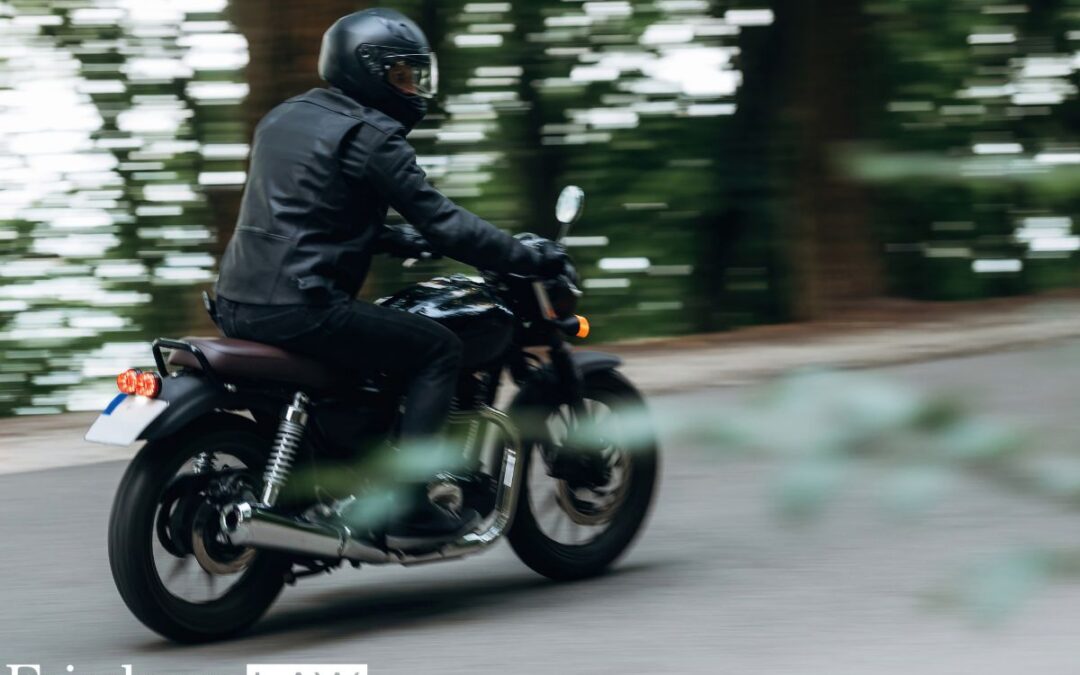
If you were injured in a motorcycle accident without a helmet, you may worry that you have lost your right to compensation. Fortunately, not wearing a helmet does not prevent you from filing a personal injury claim in Nebraska.
The key distinction is between who caused the accident and whether wearing a helmet could have made your injuries less severe. Insurance companies may use your decision not to wear a helmet to argue that they should pay less for your injuries.
Understanding Nebraska’s helmet laws and how these arguments work can help you protect your claim.
Nebraska’s Helmet Law Changed in 2024
Nebraska no longer requires all motorcyclists to wear helmets. The state’s universal helmet requirement ended in January 2024, and Legislative Bill 1004 (LB1004) later updated the rules to allow certain adults to ride without a helmet.
Under Neb. Rev. Stat. § 60-6,279, motorcycle operators who are 21 or older may ride without a helmet if they meet certain requirements.
The rules depend on when and where the rider obtained their motorcycle license:
- Nebraska Licenses Issued Before May 1, 2024: Riders must complete the Motorcycle Safety Foundation’s three-hour Basic eCourse and submit proof to the Department of Motor Vehicles (DMV).
- Nebraska Licenses Issued on or After May 1, 2024: Riders must complete the required basic motorcycle safety course and submit proof to the DMV.
- Out-of-State Licenses: Riders 21 or older with a motorcycle license issued by another state may qualify without completing Nebraska’s safety course.
All motorcycle operators must also use eye protection, such as glasses that cover the eye area, goggles, a helmet face shield, or a qualifying windshield.
Motorcyclists under age 21 must still wear helmets. Passengers 21 or older may ride without a helmet only if the operator qualifies for the exemption. Younger passengers must wear helmets.
If you violate Nebraska’s helmet law, an insurance company may use that violation to challenge your claim.
Not Wearing a Helmet Does Not Automatically Bar Your Claim
If another driver caused your motorcycle accident, you may still have a valid personal injury claim even if you were not wearing a helmet.
For example, you are riding through Lincoln when a driver suddenly turns left in front of you, causing a collision. Not wearing a helmet did not cause the accident. The driver may still be responsible for your injuries. However, the insurance company may argue that a helmet could have lessened the severity of certain injuries.
Motorcycle accidents can also cause serious injuries that helmets cannot prevent, including:
- Broken legs, arms, and other bones
- Road rash and deep cuts
- Internal injuries
- Certain spinal injuries
Not wearing a helmet does not automatically limit the compensation you may receive. Any argument that a helmet would have made a difference should be supported by evidence about your specific injuries.
How the “No Helmet” Defense Works
After a motorcycle accident without a helmet, an insurance company may argue that wearing one could have limited your injuries. This argument, commonly called the helmet defense, is used to justify paying less compensation.
For example, another driver hits your motorcycle on I-80, leaving you with a broken leg and a traumatic brain injury. The insurance company may acknowledge that the driver caused the crash but argue that a helmet could have provided greater protection against the head injury.
To support this argument, an insurance adjuster may:
- Point to motorcycle helmet safety statistics
- Suggest that riding without a helmet was an unreasonable choice
- Question whether a helmet could have prevented certain injuries
- Offer a lower settlement because you were not wearing a helmet
However, general safety statistics do not prove what would have happened in your particular accident. Although helmets can protect against serious head injuries, the insurance company still needs evidence linking your lack of a helmet to the disputed injuries.
Nebraska’s Comparative Negligence Rule and Your Recovery
Nebraska follows a modified comparative negligence rule. Under Neb. Rev. Stat. § 25-21,185.09, your share of responsibility for an accident can affect your compensation.
- Less Than 50% At Fault: You may recover compensation, reduced by your percentage of fault.
- 50% or More At Fault: You cannot recover compensation if your share of fault equals or exceeds the combined fault of those you are suing.
For example, if your accident-related damages total $100,000 and you are found 20% responsible for the crash, your compensation could be reduced by $20,000, leaving you with $80,000.
Nebraska law also distinguishes between riders who legally qualify to ride without a helmet and those who do not. If you met the state’s helmet exemption requirements, the insurance company cannot claim you violated the helmet law. It may still argue that a helmet could have reduced the severity of your injuries.
If you were legally required to wear a helmet but did not, the insurer may use that violation to challenge your claim. However, a helmet-law violation does not establish fault for the crash or justify reducing compensation for unrelated injuries.
Nebraska does not allow punitive damages in personal injury cases. Instead, you may seek compensation for losses such as medical bills, lost wages, and pain and suffering.
Evidence That Can Help Challenge the Helmet Defense
When an insurance company argues that not wearing a helmet made your injuries worse, evidence can help determine whether a helmet would have made a difference.
An experienced motorcycle accident attorney can help gather and review evidence, including:
- Medical Records: Document your injuries and help identify those unrelated to helmet use.
- Accident Reports and Witness Statements: Help establish how the crash happened and who was responsible.
- Accident Reconstruction: Can help explain how the vehicles collided and the forces involved.
- Medical and Biomechanical Opinions: May help determine whether a helmet could have prevented or lessened a particular injury.
- License and Safety Course Records: Can help establish whether you qualified for Nebraska’s helmet exemption.
Keep photographs of the accident scene, damaged riding gear, and any available video footage. These details may help your attorney evaluate the insurance company’s arguments.
Talk to a Nebraska Motorcycle Accident Lawyer Before You Settle
Before accepting a settlement after a motorcycle accident without a helmet, consider having an attorney review your claim and explain your legal options.
Founded in 1962 by Herbert J. Friedman and now led by his son, Daniel H. Friedman, Friedman Law Offices has represented injured Nebraskans for generations. Based in Lincoln, our firm helps people throughout the state pursue compensation when someone else’s negligence causes them harm.
We offer a free consultation to discuss your motorcycle accident. We handle personal injury claims on a contingency fee basis, meaning you do not pay attorney fees unless we recover compensation for you.
Contact us today to schedule a free consultation and learn how we can help.