
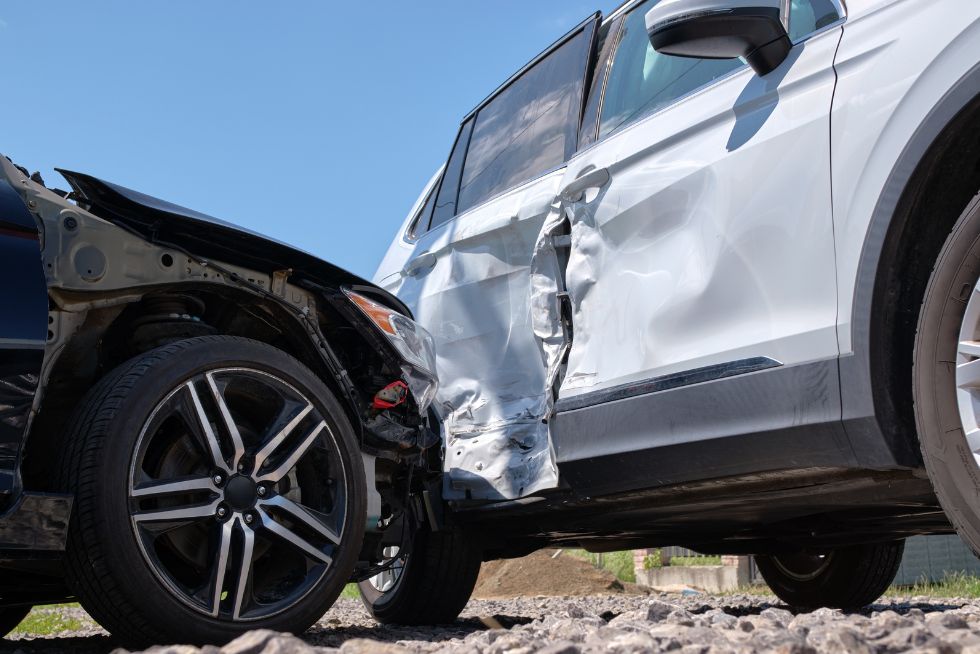
A T-bone crash can happen in seconds, but figuring out who caused it may take much longer. These collisions often occur at intersections, where both drivers may disagree about who had the green light, who had the right-of-way, or who entered the intersection first.
If you were injured in a T-bone accident in Nebraska, fault matters because state law can reduce or even eliminate your compensation if you share responsibility. A Lincoln car accident lawyer can investigate what happened and help protect your claim.
How Do T-Bone Accidents Happen?
A T-bone, or side-impact collision, involves one vehicle hitting the side of another, often at or near a 90-degree angle. Although these crashes frequently happen at intersections, they can also occur in parking lots, driveways, and other locations where vehicles cross paths.
Common causes include:
- Running a red light or stop sign
- Failing to yield the right-of-way
- Making an unsafe left turn
- Driving while distracted or impaired
- Entering an intersection without checking for approaching traffic
- Speeding through an intersection
Nebraska law also determines which driver has priority when vehicles reach an uncontrolled intersection at nearly the same time. In that situation, the vehicle approaching from the right has the right-of-way. A driver turning left must also yield to oncoming traffic that is already in the intersection or close enough to present an immediate hazard.
These crashes can be particularly dangerous because the impact may occur beside a driver or passenger. The Insurance Institute for Highway Safety reports that side impacts accounted for 22% of passenger-vehicle occupant deaths in 2024.
How Is Fault Determined in a T-Bone Crash?
Determining who is at fault in T-bone accidents requires more than looking at which vehicle struck the other. Investigators and insurance companies look at what each driver was doing immediately before the collision.
The central question in many cases is who had the right-of-way. For example, a driver who ran a red light and struck a vehicle legally crossing the intersection may be primarily responsible. Similarly, a driver making a left turn may be liable for turning across the path of an approaching vehicle.
A driver with the right-of-way may still bear some responsibility if they were speeding or distracted. Others may also share responsibility, such as another driver whose actions contributed to the collision or a manufacturer if a vehicle defect contributed to the crash.
Fault ultimately depends on whose actions caused or contributed to the collision, based on the traffic laws and available evidence.
What Evidence Can Help Prove Fault?
When drivers give conflicting accounts of a Nebraska intersection accident, evidence can help show what happened.
Important evidence may include:
- Police Crash Reports: The responding officer may document statements, vehicle positions, road conditions, and other observations.
- Photos and Videos: Pictures of vehicle damage, skid marks, traffic signals, signs, and the intersection can help establish how the crash occurred.
- Traffic or Surveillance Cameras: Video may show which vehicle entered the intersection first or which driver had the light.
- Witness Statements: Independent witnesses can be valuable when the drivers disagree.
- Vehicle Data: Some vehicles record information about speed, braking, and other actions immediately before a crash.
- Accident Reconstruction: In disputed cases, an expert may use physical evidence to reconstruct the vehicles’ movements.
The location of the damage can also provide clues, but it does not automatically determine fault.
How Does Nebraska’s Comparative Negligence Rule Affect Your Recovery?
Under Nebraska Revised Statute § 25-21,185.09, your compensation is reduced according to your percentage of fault.
If your negligence is equal to or greater than the total negligence of the people you are seeking compensation from, you cannot recover damages. For example:
| Your Share of Fault | How the Rule Applies | Effect on a $100,000 Claim |
| 0% | The other parties carry all of the negligence, so nothing is subtracted from your damages. | $100,000 |
| 20% | Your damages are reduced in proportion to your own share of the negligence. | $80,000 |
| 49% | You are still below the bar, so you may recover, at a reduced amount. | $51,000 |
| 50% | Your negligence equals the total negligence of the parties you seek recovery from, which triggers the statutory bar. | No recovery |
| 75% | Your negligence is greater than theirs, so the same bar applies. | No recovery |
At 49% fault, you could still recover reduced compensation. At 50%, you recover nothing.
What Should You Do After a T-Bone Accident?
What you do after the crash can help preserve evidence and protect your claim. If possible, call the police, photograph the vehicles and intersection, get contact information from witnesses, and seek medical care for your injuries.
Avoid admitting fault or guessing about what happened. You should also be cautious about giving a recorded statement to the other driver’s insurance company before you understand your rights.
If law enforcement did not investigate a Nebraska crash involving an injury, death, or at least $2,000 in damage to any one person’s property, the Nebraska Department of Transportation requires drivers to submit a crash report within 10 days.
What Compensation Can You Recover?
If another driver caused your injuries, compensation may include:
- Medical expenses and future treatment
- Lost wages and reduced earning ability
- Vehicle damage and other property losses
- Pain and suffering
Your recovery will depend on your damages and percentage of fault.
Get Help Proving Fault After a Lincoln T-Bone Accident
When both drivers claim they had the right-of-way, a T-bone crash can become one driver’s word against another’s.
A Lincoln car accident lawyer at Friedman Law Offices can review the crash report, preserve video and other evidence, speak with witnesses, and challenge attempts to place an unfair share of the blame on you.
Contact our team today for a free consultation about your Nebraska car accident claim.